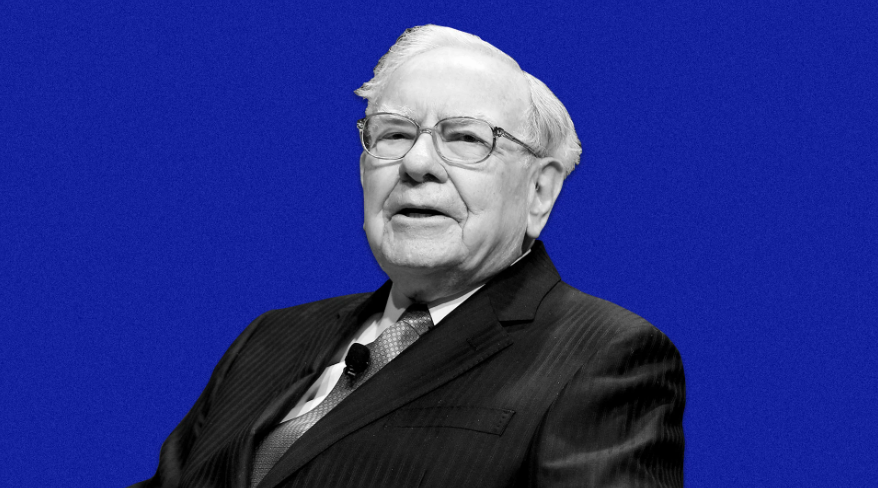
Buffett’s 5/10 Verdict: Why Your Healthcare-Heavy Portfolio Is Risky
Warren Buffett roastuje Twoje portfolio
Zroastowano May 10, 2026
Klasa aktywów
Region
Strategia
Największe pozycje wg wagi
Pull Up a Chair and Let's Look at Your Pharmacy
Well, grab a seat. I just opened a cold Cherry Coke, and looking at this portfolio, I might need a second one. My old partner Charlie Munger used to say, "The best way to get smart is to read a lot," but looking at your holdings, I’m guessing the only things you’ve been reading lately are medical journals and clinical trial results!
You’ve built what looks less like an investment portfolio and more like a hospital ward. Now, I love a good business that provides a necessary service, and keeping folks healthy is about as necessary as it gets. But investing is about buying wonderful businesses at fair prices, not just backing the latest medical miracles. Let’s put this under the microscope and see if you’re building a durable compounding machine or just riding a wave of pharmaceutical euphoria.
Examining the Competitive Moats
Let’s talk about your cash position first. You’re sitting on 7.3% in cash reserves. I’ve always said we like to keep plenty of cash on hand at Berkshire—it’s oxygen when Mr. Market has a panic attack. A 7.3% reserve is a respectable amount of dry powder, but remember: idle capital is dead capital. Cash is king only when you deploy it wisely during a market fire sale.
Now, looking at your sector breakdown, I have to chuckle. You have 77.4% of your money directly in healthcare stocks, and then another 15.3% in a broad market ETF (which is entirely the XLV Healthcare ETF!). Geographically, you're mostly parked in North America with about 17.6% across the pond in Europe, finding some good businesses like Roche and AstraZeneca.
I do commend your eye for competitive advantage. Over 57% of your portfolio is protected by intangible assets like patents and brands. Companies like Merck and AbbVie have built massive cash-generating machines this way. You’ve also correctly identified scale advantages with UnitedHealth Group (9.2%) and switching costs with Intuitive Surgical (6.8%). Once a hospital installs those da Vinci robots and trains their surgeons, they aren't switching to a competitor anytime soon. That is a beautiful moat.
A Prescription for Trouble
🚩 Terminal Sector Concentration: Son, you aren't diversified; you’ve essentially opened a mutual fund for hypochondriacs. With effectively over 90% of your capital tied to a single sector, you are fully exposed to FDA regulatory changes, patent cliffs, and Medicare pricing legislation. Diversification is protection against ignorance, and nobody knows exactly what Washington will do to healthcare profits next year.
🚩 Overpaying for the Weight-Loss Hype: You have almost a quarter of your entire portfolio concentrated in just two companies: Eli Lilly (12.4%) and Novo Nordisk (11.8%). They are fantastic, wonderful businesses. But Mr. Market has bid their prices up to the stratosphere because of the Ozempic and Wegovy craze. A wonderful company at a terrible price becomes a terrible investment. Where is your margin of safety?
🚩 Redundancy and "Diworsification": You own 15.3% in the XLV Healthcare ETF, but you already own almost all of its top holdings individually (UNH, JNJ, LLY, ABBV, MRK). You are paying ETF management fees to hold the exact same stocks you are picking yourself. You need to decide if you are a stock picker or a passive investor—right now, you're paying for both and getting no extra diversification.
🚩 The Patent Cliff Illusion: While you love those patent-based moats, remember that in pharmaceuticals, every patent is a melting ice cube. Once the exclusivity runs out, generic competition destroys the moat overnight.
The Oracle's Prescription
Score: 5/10
You have excellent taste in high-quality, moat-protected businesses, but your portfolio construction is dangerously lopsided. Here is what you need to do:
1. Take Some Profits on the High-Flyers: Trim your heavy positions in Eli Lilly and Novo Nordisk. Lock in some of those gains before Mr. Market realizes trees don't grow to the sky. Move that capital into your cash reserves until cheaper opportunities arise.
2. Buy Something Other Than Medicine: You need exposure to entirely different economic engines. Start looking at financials, consumer staples, or industrials. Find a railroad, a bank, or a company making ketchup—something that doesn't require an FDA trial to turn a profit.
3. Eliminate the Redundant ETF: Sell the XLV ETF and use the proceeds to buy into a true S&P 500 index fund if you want broad market exposure, or allocate it to new sectors.
As I like to say, "It is not necessary to do extraordinary things to get extraordinary results." But it is necessary to avoid betting your entire life savings on a single industry's regulatory environment. Keep reading those annual reports, but maybe pick up one outside the pharmacy aisle!
O tej analizie
Ten roast portfolio został wygenerowany przez AI PortfolioGlance, analizując Twoje portfolio z perspektywy Warren Buffett. Analiza ocenia alokację aktywów, koncentrację sektorową, dywersyfikację geograficzną, czynniki ryzyka i dostarcza konkretne rekomendacje.
To jest analiza edukacyjna wygenerowana przez AI, nie porada finansowa. Zawsze konsultuj się z wykwalifikowanym doradcą finansowym przed podjęciem decyzji inwestycyjnych.