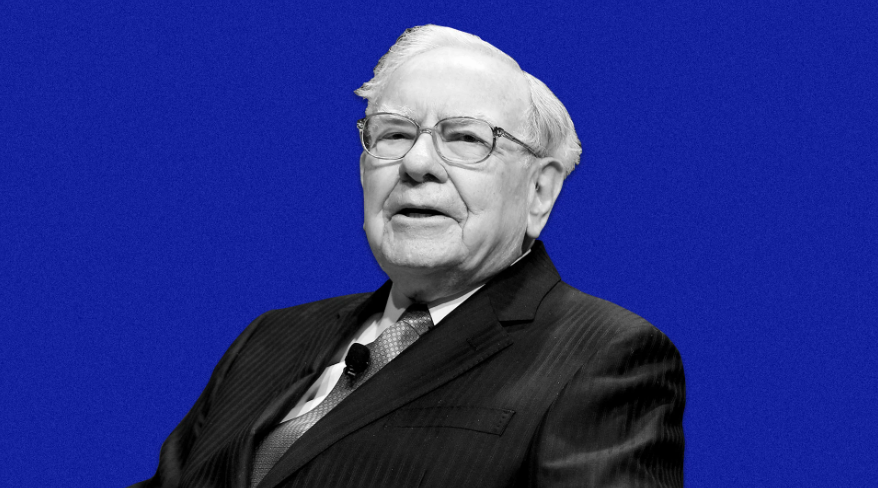
Buffett Roasts Your Safety-First Portfolio: Sell the Shiny Rocks
Warren Buffett is roasting your portfolio
Roasted on April 24, 2026
Asset Class
Region
Strategy
Top Holdings by Weight
Pull Up a Chair and Grab a Cherry Coke
Well, hello there. Pull up a chair. I was just reviewing your portfolio—this "Horizon Global Resilience Core" you've put together. It sounds less like an investment portfolio and more like an insurance product sold by a fellow in a very expensive suit who charges 2% a year for the privilege.
Charlie Munger used to look at portfolios like this and just shake his head. It’s clear you’re terrified of losing money, which is Rule Number One, so I commend you for that. But Rule Number Two is not forgetting Rule Number One, and unfortunately, you might just be protecting yourself right out of a decent return. You’ve built a financial bunker here, but investing isn't about hiding from the future; it's about owning a piece of it. Let’s take a look under the hood and see if we can get this engine producing real wealth instead of just surviving the winter.
Examining Your Productive Acres
Looking at your sector breakdown, you’ve parked roughly 35% of your money in bonds and fixed income, and a staggering 42.7% of your overall strategy is dedicated to safety and hedging. That is a mighty conservative posture. You’re lending a lot of money to the government through TLT, AGG, and TIPS. Remember, bonds are just promises to pay you back in a currency that will almost certainly be worth less than it is today.
On the equity side, I see some wonderful businesses. You've got 67% of your capital in North America—never bet against America! I was delighted to see Chevron (CVX) at nearly 4% of your holdings; Charlie and I have bought a fair bit of that ourselves. It has a tremendous scale advantage. You also hold Johnson & Johnson, Nestle, and Microsoft. These are formidable castles with deep economic moats—whether it’s switching costs or irreplaceable brand loyalty.
However, your cash reserves sit at just 5.9%. Now, I love putting capital to work, but cash is your dry powder. Cash is king only when you deploy it, but you need enough on hand for when Mr. Market wakes up depressed and decides to offer you wonderful businesses at fire-sale prices. At less than 6%, you don't have enough flexibility to swing the bat when a fat pitch comes across the plate.
Where Mr. Market Might Bite You
🚩 The Shiny Pet Rock (7.6% GLD)
You have over 7% of your hard-earned money sitting in SPDR Gold Shares. You know my feelings on gold. You could take all the gold in the world, and it would form a cube 67 feet on a side. It will just sit there and look at you. It produces no earnings, no dividends, and no crops. It is entirely a bet that someone else will pay more for it tomorrow out of fear. Swap that shiny rock for a productive business.
🚩 Interest Rate Risk Disguised as Safety
You’re holding 12.1% in the iShares 20+ Year Treasury Bond ETF (TLT). People think long-term government bonds are risk-free. They are free from default risk, but they are absolutely loaded with purchasing power risk and interest rate risk. When rates move up, long-duration bonds get hammered. You’re paying a high premium for "safety" that might just safely erode your wealth.
🚩 Over-Diversification and "Di-worsification"
You’ve got broad market funds like VOO alongside the MSCI World index, and then you’ve sprinkled in tiny single-digit allocations to great companies. As I always say, diversification is protection against ignorance. It makes very little sense for someone who knows what they are doing. If Microsoft is a wonderful business with a wide moat, why is it only 5.2% of your wealth, while an unyielding lump of gold gets 7.6%?
My Two Cents on Your Future
I’ll give this portfolio a 6 out of 10. It’s not going to zero—you’ve insulated yourself from catastrophe reasonably well—but it’s not going to compound your wealth at a rate that will make you truly financially independent either. You are paying a steep opportunity cost for all this "resilience."
Here is what I recommend you do:
1. Sell the gold: Take that 7.6% from GLD and either put it into cash to wait for a bargain, or buy more of the wonderful businesses you already own.
2. Trim the long bonds: Re-evaluate that heavy 35% fixed-income allocation. If you don't need the income tomorrow, shift some of that capital out of long-term treasuries and into productive American equities.
3. Build your cash reserves: Let your cash balance drift up toward 10-15%. You want to be greedy when others are fearful, but you can't be greedy if your pockets are empty.
4. Concentrate on your moats: You’ve correctly identified companies with massive competitive advantages (MSFT, JNJ, CVX). Don't be afraid to let your winners represent a more meaningful portion of your net worth.
Always remember: “A wonderful company at a fair price beats a fair company at a wonderful price.” Stop buying safety, and start buying businesses.
About This Analysis
This portfolio roast was generated by PortfolioGlance’s AI, analyzing your portfolio from the perspective of Warren Buffett. The analysis evaluates asset allocation, sector concentration, geographic diversification, risk factors, and provides actionable recommendations.
This is an AI-generated educational analysis, not financial advice. Always consult a qualified financial advisor before making investment decisions.