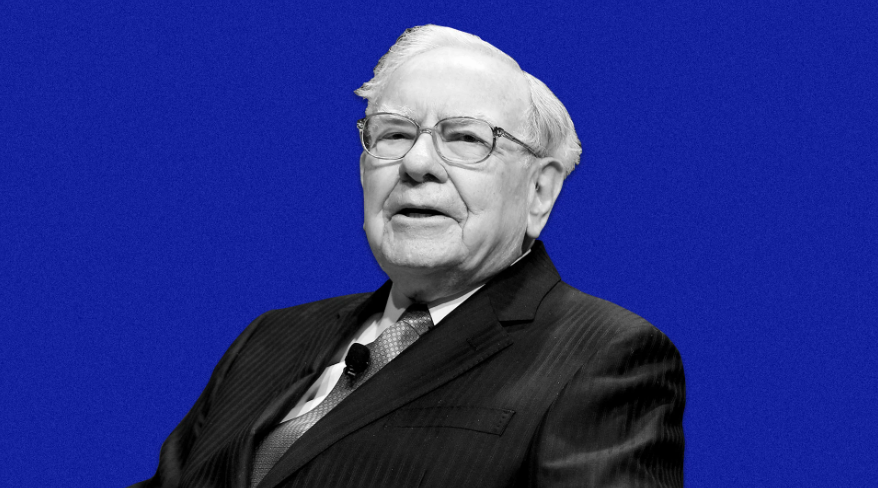
Buffett’s Verdict: Why This 4/10 Portfolio Bets Against America
Warren Buffett is roasting your portfolio
Roasted on May 10, 2026
Asset Class
Region
Strategy
Top Holdings by Weight
Pulling Up a Chair in Omaha
Grab yourself a Cherry Coke and pull up a chair. When I look at your portfolio, I see a 15-year horizon and an 8% return target. That’s a sensible, patient timeline—the kind of long-term thinking Charlie Munger and I always appreciated at Berkshire. But my friend, the way you’ve built this portfolio makes me think you’re letting the wind blow you in every direction at once.
You’ve decided to explicitly exclude tech and the "Magnificent 7." Now, I was late to the technology party myself, but today Berkshire owns a rather large chunk of a certain fruit company in Cupertino because it has an absolute fortress of a consumer moat. Blanket exclusions based on sector titles rather than business fundamentals will often cause you to miss out on wonderful companies at fair prices. Let’s take a look under the hood of this collection of yours and see if we can’t apply a little common sense to it.
Examining the Spread
Let’s talk about your asset allocation. You’ve got about 68% of your money in broad market ETFs. I have always said that for 99% of investors, a low-cost index fund is the most sensible choice. It's diversification against ignorance. However, your geographic exposure is quite a sight. You’ve allocated nearly 36% globally, 23% to Asia-Pacific, and only about 15% to North America. In my 90-plus years, I’ve found that it rarely pays to bet against the American economic tailwind.
You’re sitting on roughly 5.9% in cash reserves. That’s enough to buy a lot of peanut brittle at See’s Candies, but it’s a bit light for my taste. Cash is a terrible long-term investment, but it’s the oxygen you need when Mr. Market gets depressed and puts wonderful businesses on sale. Right now, you barely have enough dry powder to take advantage of a real panic.
But what really made me chuckle were your reasons for buying some of these assets. You bought a Fidelity Japan Value fund simply because you "had some spare Japanese yen after a trip to Japan"? Charlie would have hit you over the head with a ledger for that one! You don't buy a business because the currency was burning a hole in your pocket from a vacation. Furthermore, you’ve parked over 14% of your money in a Singapore ETF just to "hedge" with SGD, admitting you are "unsure" of your goal. You should never own an asset if you don't know why you hold it.
Where the Moat is Leaking
🚩 Listening to the Barber: You bought Value Partners High-Dividend, BlackRock Sustainable Energy, and AB Mortgage Income for one primary reason: "recommended by my banking apps." Never ask a barber if you need a haircut, and never ask a brokerage app what to buy. They are in the business of generating fees, not building your wealth.
🚩 Bizarre Exit Strategies: For Neutech Group, your stated goal is to "exit when price drops 70% or skyrockets." If a business is fundamentally wonderful, a 70% drop is when you back up the truck and buy more! If it’s a bad business, why on earth would you wait to lose nearly three-quarters of your capital before selling?
🚩 Tripping Over Dollars to Pick Up Pennies: You bought Bilibili because you like the service—a reasonable starting point. But your exit strategy is to sell off a perfectly good holding simply because you can't afford a $20 dividend fee if they distribute twice a year. You are letting a tiny administrative fee dictate a major investment decision. That is the definition of letting the tail wag the dog.
🚩 Unproductive Assets: You have 5.1% in the SDCI commodity futures ETF. Commodities don't produce anything. They don't pay dividends, they don't grow earnings, and they don't invent new products. You are simply hoping someone else will come along and pay you more for it later. That is speculation, plain and simple.
The Oracle's Scorecard
I'm going to give this portfolio a 4 out of 10. You have the right time horizon and a decent foundation of index funds, but your decision-making process is letting Wall Street algorithms and vacation pocket-change steer your financial future.
Here is what I recommend you do:
1. Stop taking advice from your banking apps. Do your own thinking. If you don't want to analyze businesses, put that capital into a low-cost, broadly diversified global or S&P 500 index fund and go play golf.
2. Re-evaluate your bet against America. You don't have to buy the "Magnificent 7" if you find them too expensive, but deliberately keeping your North American exposure under 16% is ignoring some of the best capital compounders in the history of the world.
3. Write down an actual business thesis. Go through every single holding. If your reason for owning it is "unsure" or "spare travel money," sell it and add to the cash reserves until you find a pitch right in your strike zone.
4. Fix your exit strategies. Decide if you are an owner of a business or a trader of paper. If you are an owner, you hold as long as the economic characteristics of the business remain intact.
As I've said many times: "Risk comes from not knowing what you're doing." Take control of the wheel, ignore the brokerage apps, and start thinking like a business owner.
About This Analysis
This portfolio roast was generated by PortfolioGlance’s AI, analyzing your portfolio from the perspective of Warren Buffett. The analysis evaluates asset allocation, sector concentration, geographic diversification, risk factors, and provides actionable recommendations.
This is an AI-generated educational analysis, not financial advice. Always consult a qualified financial advisor before making investment decisions.