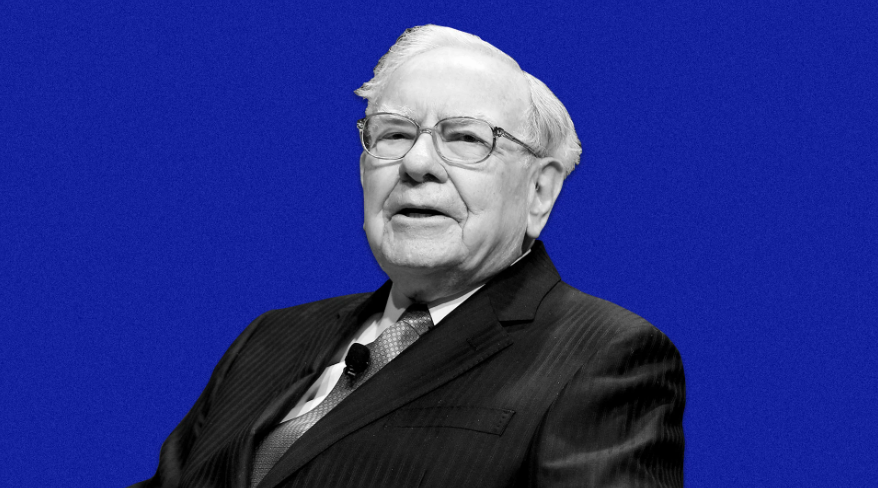
Buffett's Verdict: Your 6/10 All-Weather Portfolio is Full of Rat Poison
Warren Buffett is roasting your portfolio
Roasted on April 22, 2026
Asset class
Region
Strategy
Top holdings by weight
Pulling Up a Chair with a Cherry Coke
Well, hello there. I’ve just cracked open a cold Cherry Coke, put my feet up, and taken a good, long look at this "Global Resilience All-Weather Shield" portfolio you’ve put together. Now, that name sounds an awful lot like something a Wall Street salesman in a fancy suit would invent just before charging you a 2% management fee.
Investing shouldn’t be about building impenetrable fortresses or dodging every raindrop. It’s about buying wonderful businesses at fair prices and letting American productivity do the heavy lifting for you over decades. Charlie Munger and I always say that if you try to be ready for absolutely everything, you usually end up prepared for nothing. Looking at your holdings, I see a mix of brilliant common sense, a whole lot of fear, and a dash of pure, unadulterated speculation. So, let’s peel back the layers of this particular onion and see what makes it stink—and what makes it sweet.
Peeking Under the Hood of this Contraption
Let's start with the good news, because there is plenty to like here. You’ve got about 31% of your wealth sitting in broad market indexes, anchored by the Vanguard S&P 500 ETF (18.3%). I’ve said it a million times: for most folks, consistently buying an S&P 500 index fund is the single best investment they can make. You’re hitching your wagon to the greatest wealth-producing machine in human history—American business.
I also tip my cap to the individual businesses you've selected. Microsoft (6.8%), Johnson & Johnson (3.1%), and Novo Nordisk (5.7%) are fantastic enterprises. They possess durable competitive advantages—what I call a "moat." Microsoft has immense switching costs, and the healthcare giants hold invaluable patents and brand loyalty. You are buying a piece of future cash flows, and those streams look mighty wide and deep.
However, your sector breakdown shows you’re playing incredibly defensively, with nearly 44% of your strategy earmarked for "Safety" and about a third of your money (33.1%) locked up in fixed income. You’re letting fear drive the bus.
And let's talk about your cash reserves. You are sitting on exactly 4.2% in cash. Now, cash is a terrible long-term investment, but it is the oxygen of capitalism. At Berkshire, we always keep a massive pile of dry powder (usually in short-term T-bills) so that when Mr. Market gets depressed and puts wonderful companies on sale, we can swing a very heavy bat. At 4.2%, your bat is too light. If a fat pitch comes across the plate tomorrow, you simply don't have the liquidity to capitalize on it.
Rat Poison, Shiny Rocks, and Dead Money
We need to have a serious talk about the baggage in this portfolio. Charlie would be much harsher than I am, but here is where you are actively hurting your compounding machine.
🚩 Rat Poison Squared: You’ve got 2.4% of your hard-earned money in Bitcoin. It produces absolutely nothing. It doesn't mail you a dividend check, it doesn't manufacture a product, and it doesn't grow. Its only value relies entirely on the hope that some greater fool will come along and pay you more for it later. That is speculation, not investing.
🚩 The Shiny Pet Rocks: Between Physical Gold (10.6%) and the Silver Trust (3.1%), you’ve parked nearly 14% of your wealth in unproductive metal. Gold has two significant shortcomings: it is of neither much use nor procreative. You can fondle a gold cube all day, but it won't produce anything. If you own all the farmland in America, it produces food. If you own businesses, they produce profits. Gold just sits there and looks at you. You are paying for the privilege of holding dead money out of a fear of inflation, when the best inflation hedge is a great business that can raise its prices.
🚩 Duration Risk in Bonds: I see you holding the 20+ Year Treasury Bond ETF (9.2%). Tying your money up for two decades at fixed yields is a dangerous game. Inflation can eat your purchasing power alive over that timeframe. If you want safety, stick to short-term T-bills. Don't lock your capital in a 20-year cage.
The Oracle's Scorecard
I’ll give this portfolio a 6 out of 10. You get passing grades because your foundation is built on the S&P 500 and wonderful, moat-protected businesses. But you lose heavy points for hoarding non-productive assets and speculative tokens.
Here is what I’d suggest to get this compounding machine humming:
1. Sell the shiny rocks: Liquidate the gold and silver. Take that ~14% and deploy it into productive assets. A wonderful company at a fair price will always beat a lump of metal over a lifetime.
2. Exterminate the rat poison: Get rid of the Bitcoin. Don't play games with assets that rely solely on the greater fool theory.
3. Build your dry powder: Take the proceeds from your speculative sales and bump that 4.2% cash reserve up closer to 10-15%, held in short-term US Treasury bills. Wait patiently for Mr. Market to offer you a screaming bargain.
4. Shorten your bond duration: Re-evaluate that 20-year bond ETF. In my view, if you need safety, short-term government debt is the only place to park cash while preserving its value without taking on massive interest rate risk.
Remember what Charlie Munger always tells me: "The big money is not in the buying and the selling, but in the waiting." Get rid of the junk, buy great businesses, and let time do the heavy lifting.
About this analysis
This portfolio roast was generated by PortfolioGlance’s AI, analyzing your portfolio from the perspective of Warren Buffett. The analysis evaluates asset allocation, sector concentration, geographic diversification, risk factors, and provides actionable recommendations.
This is an AI-generated educational analysis, not financial advice. Always consult a qualified financial advisor before making investment decisions.